Predictive maintenance

Predictive maintenance software for the machines nobody instrumented

Condition trends with the time left attached, baselines set per machine, and the rules that turn a prediction into a job somebody actually does.

  • Covers unconnected machines
  • Live in weeks, not quarters
  • Pay only after go-live
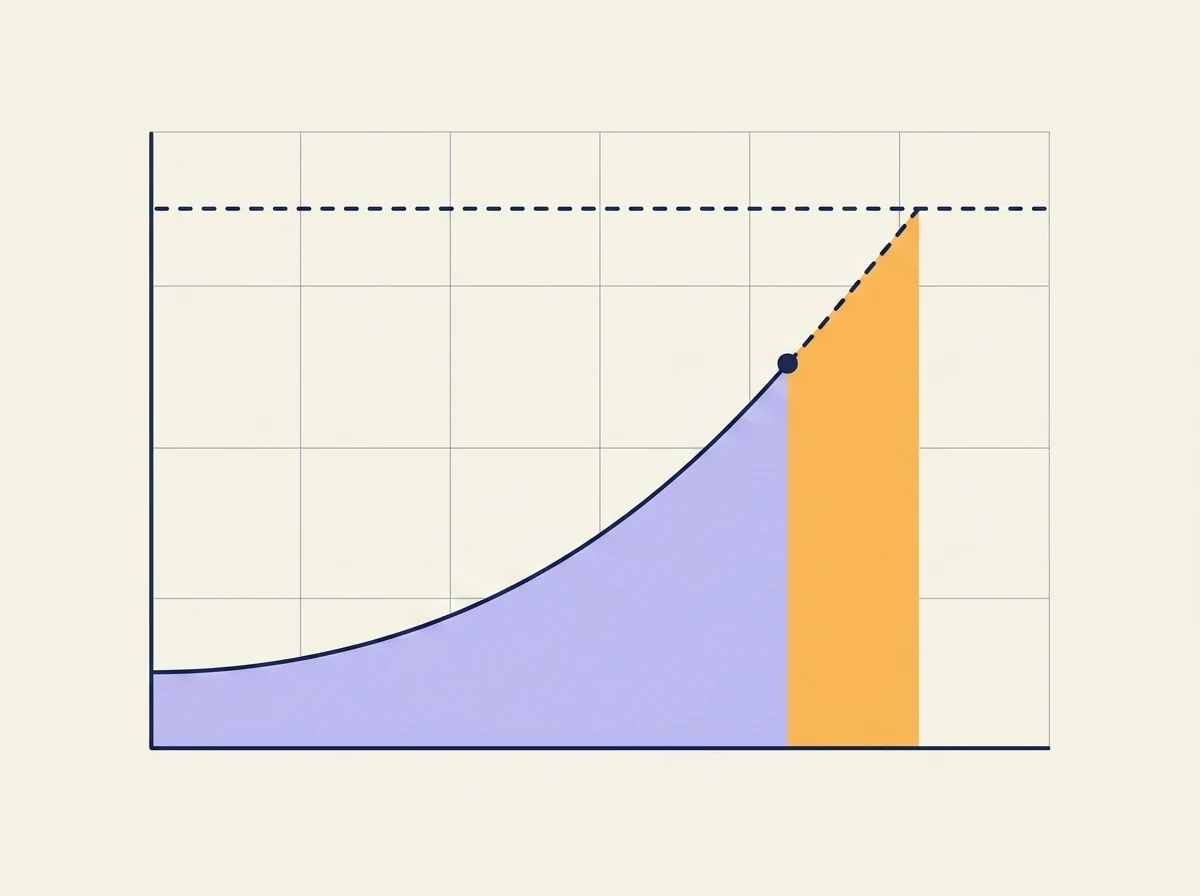
Illustrated condition curve drawn as line art: a rising line approaching a dashed horizontal limit, with a marked point where the reading stands today and a shaded orange band ahead of it showing the predicted failure window.

The category

What predictive maintenance actually means

Predictive maintenance watches the condition of a machine and estimates when it is likely to fail, so the repair can be planned before it happens. The useful output is a date and a confidence, not a red light.

Three terms get used as though they were the same thing. Preventive maintenance runs on a fixed interval, every 500 hours or every six months, whether the machine earned it or not. Condition based maintenance acts when a reading crosses a threshold. Predictive maintenance reads the trend of those numbers to estimate when the threshold will be crossed, which is the part that buys you time to schedule.

All three depend on knowing the condition of the machine. In heavy industry that is exactly where the category tends to break down.

The gap

When the warning arrives too late to use

01

The same failure mode keeps recurring and nobody has costed what it actually takes out.

02

Alerts fire often enough that the team has stopped reading them.

03

Services run on a fixed interval whether the machine worked that month or not.

04

The machines most likely to fail are the ones with no sensors on them.

The fourth one is the hard one, and it is the reason most predictive maintenance projects cover a fraction of the fleet and stall there.

Capabilities

What the platform covers

Nine areas, weighted toward what happens after a prediction rather than toward the model that produced it.

Condition trends

Readings going the wrong way, with time attached

Temperature, pressure, vibration and current tracked over time, with the projection out to the alarm limit shown next to them. The useful output is not that a reading is high. It is that it will be out of range in nine days.

Scheduling

The predicted window, against the slots you actually have

A failure window is only actionable next to the operation calendar. The job gets booked into the last quiet slot before the window opens, rather than into whichever morning the planner happened to be looking at.

Anomalies

Normal for that machine, not normal in general

Each unit is compared against its own history. A 2004 crane running warmer than a 2023 one is not news. The same crane running warmer than it did last month is. Fleet-wide thresholds generate alerts nobody trusts, and untrusted alerts get ignored.

Policy

What the operation does about a prediction

Rules written in your terms: risk high and spare in stock raises the job now, risk high with no spare orders the part and derates the unit, critical to the berth plan escalates to the planner. The prediction is the easy half. This is the half that changes an outcome.

Coverage

The machines that were never instrumented

Most heavy fleets are part connected and part not, and the unconnected part is usually older and closer to failure. Field reports count as condition data here, so coverage is the whole fleet instead of the sensor-equipped share of it.

Risk

Which machines carry the most risk

Condition, criticality and consequence ranked together, so the reliability team can argue from evidence. A minor fault on the only unit that can service a berth outranks a serious fault on a spare.

Cost

What catching it early is actually worth

The same repair costed both ways: four hours on day shift with a part from stock, against thirty-one hours with a call-out crew, air freight and two other units standing idle. The parts bill is rarely what moves. The other three lines are.

Telemetry

Whatever is already fitted, feeding one record

Telematics, gateways, PLC and SCADA tags all arrive at the same machine record instead of a separate dashboard nobody opens. The point of connecting a machine is what ends up in its history.

ERP

The job raised in the system you already run

A prediction that does not become a work order is an observation. Opsima raises the job in your CMMS, SAP or Maximo with the reasoning attached, and writes the outcome back so the next prediction is better informed.

The difference

The machines most likely to fail are the ones with no sensors

Every predictive maintenance platform works well on a connected asset. Readings arrive, the model trends them, an alert fires. That is a solved problem, and it is why the demos are convincing.

Then you look at the actual fleet. The 2023 units are instrumented. The 2004 units are not, because retrofitting sensors onto them costs more than they are worth, and those are the units closest to failing. A predictive programme that covers the newest third of the fleet is solving the easiest third of the problem.

Opsima treats what crews say as condition data. An operator reporting that a spreader is sluggish, a fitter noting a hydraulic weep on a walk-around, a machine pulled out of service twice in a fortnight for reasons explained out loud at handover. Those are observations about condition, and they arrive daily. Written to the machine record and trended alongside telemetry, they give the unconnected two thirds of the fleet a signal it never had.

In the field

At PNCT, a US container terminal running more than 100 straddle carriers, this layer lifted fleet availability by 5% and cut breakdowns by roughly 15%.

Recorded equipment status changes went from roughly 1,000 a month to roughly 14,000 over the same period, which is what made the condition history dense enough to be worth trending. Taavura's Earth Moving Division runs the same layer across quarries and infrastructure sites.

Delivery

Two ways in

Tailor

Add the layer to the maintenance system you run

Your CMMS, SAP or Maximo stays the system of record. Opsima adds condition trending, the policy rules and coverage of the unconnected machines, then raises the resulting jobs in your system. IT reviews and signs off the rollout in staging before it goes live.

Build

Replace a programme that stalled

When a predictive pilot covered a handful of assets and never went further, usually because extending it meant instrumenting everything, Opsima builds the replacement around the fleet you actually have. It runs on your servers or ours. Working software ships in weeks, and you pay once it earns its place.

Questions from operations and maintenance teams

What is predictive maintenance software?
Predictive maintenance software watches the condition of a machine and estimates when it is likely to fail, so the repair can be scheduled before it happens rather than after. It sits a step beyond preventive maintenance, which services on a fixed interval whether the machine needs it or not, and a long way beyond fixing things when they break.
What is the difference between predictive, preventive and condition based maintenance?
Preventive maintenance runs on a schedule: every 500 hours, every six months. Condition based maintenance acts on a reading crossing a threshold: temperature above a limit, vibration outside a band. Predictive maintenance uses the trend of those readings to estimate when the threshold will be crossed, which is what lets you plan the intervention instead of reacting to it.
Does this only work on machines with sensors?
No, and that is the main thing separating this from most of the category. Sensors cover part of a heavy fleet and rarely the older part. Opsima treats what crews report as condition data alongside telemetry, so an unconnected reach stacker that three operators have described as sluggish this week carries a real signal rather than none at all.
What data do you need to start?
Less than most vendors ask for. Run hours or meter readings, the repair history you already have, and whatever telemetry exists. Failure history is what most models actually learn from, and almost every operation has more of it than it thinks, scattered across work orders and handover notes.
Do we need to replace our CMMS or EAM?
No. The prediction is only useful if it turns into a scheduled job, so this runs against the maintenance system you already have. Opsima raises the work order in your CMMS, attaches the reasoning, and writes the outcome back so the next prediction is better informed.
How long before it is running?
Weeks. Each build starts from one asset class with a failure mode that actually costs you money, rather than instrumenting an entire site and hoping something useful falls out. You pay once it earns its place.
Working session

One failure mode.
Predicted early enough to matter.

Bring the failure that keeps costing you a shift. We build it on your real history and run it with you. You pay only after it goes live.

On your existing stack
Live in weeks, not quarters
Pay only after go-live
Built and run for you