EDI

EDI software for the documents that start out on paper

Bills of lading, manifests, packing lists, proofs of delivery and hazardous materials declarations, read off whatever they arrive on and sent as the transaction your partner is waiting for. X12 and EDIFACT, for freight, terminal and logistics operations.

  • X12 and EDIFACT
  • Partners live in days
  • Pay only after go-live
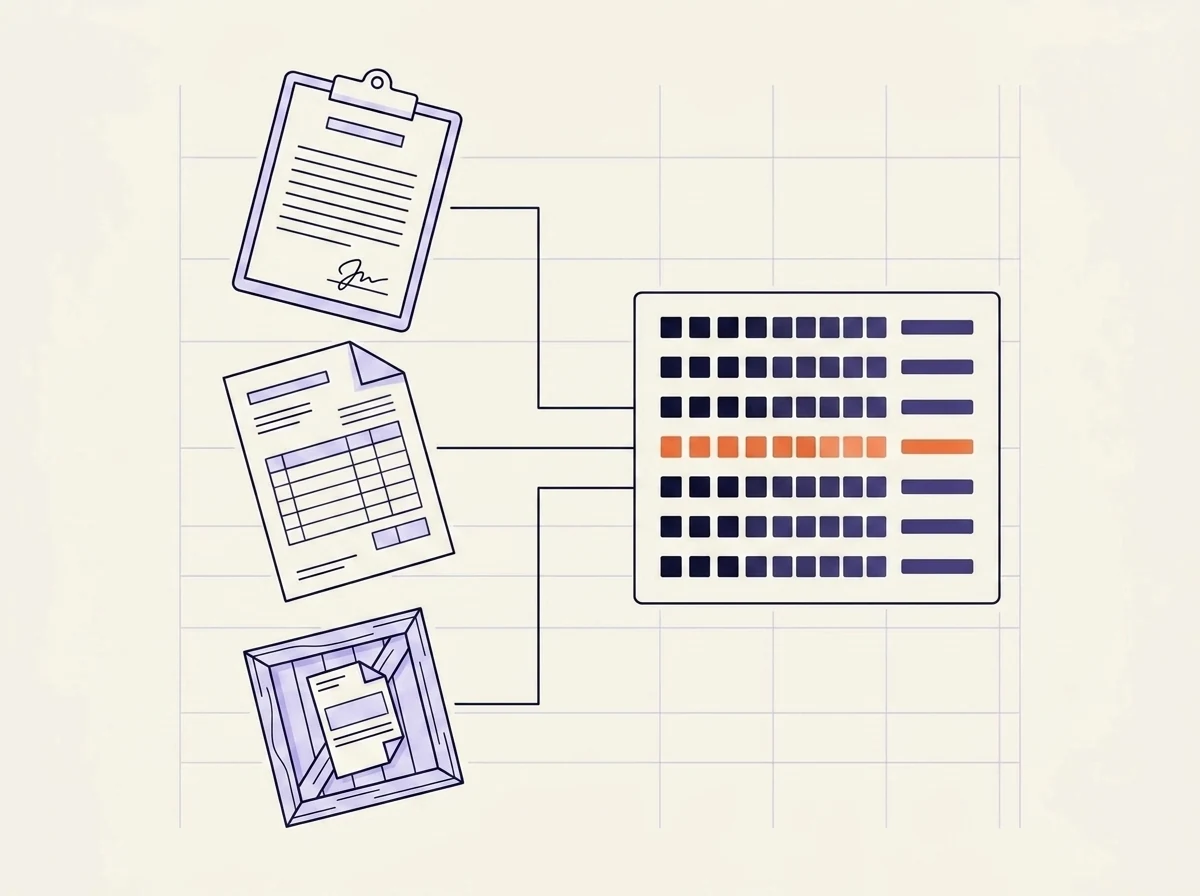
Illustrated document flow: a signed delivery note on a clipboard, a ruled manifest sheet and a crate carrying a shipping label, drawn as line art, each connected by a line into a single structured record panel whose rows of data fields include one highlighted in orange.

The category

What EDI actually is

Electronic data interchange (EDI) is how two companies exchange business documents system to system, without a person retyping them. A load tender, a ship notice, a delivery status and an invoice each travel as a structured message in a format both sides agreed on ahead of time. ANSI X12 is the standard across North America. EDIFACT is the international equivalent.

The transaction sets are the vocabulary. A 204 tenders a load, a 214 reports where it got to, an 856 says what is on the vehicle, a 210 bills for it. Those messages move over AS2, SFTP or a value-added network, and a 997 comes back to confirm each one arrived and parsed.

That part of the problem is well solved, and plenty of vendors solve it. The part that stays broken is the half of the document trail that never starts in a system at all.

The gap

When EDI stops keeping up

01

A chargeback lands because a status message went out late, and nobody can reconstruct why.

02

Onboarding one new customer takes a quarter and an outside consultant.

03

The same shipment gets keyed into the portal, the TMS and a spreadsheet on its way out of the gate.

04

Your proof of delivery is a photo on a driver's phone, and the invoice waits behind it.

Every one of those is a document that existed before the message did. The delay is the distance between the two.

Capabilities

What the platform covers

Nine areas, grouped around the way documents actually move through an operation instead of around a list of supported formats.

Intake

Documents read off whatever they arrive on

A bill of lading photographed at the gate, a manifest emailed as a PDF, a packing list that came off a fax. All three get read into the same fields as a structured message, and land on the same job record. Nobody rekeys them into a portal.

Mapping

X12 and EDIFACT, mapped to your real documents

Mapping is done against documents that already went out the door instead of against a specification in a PDF. Load tendered becomes a 204, arrived at stop becomes a 214, packed becomes an 856. Adding a segment a partner insists on is a configuration change rather than a release.

Partners

Trading partners live in days

Each partner gets their own map, their own connection and their own test cycle, tracked to go-live rather than handed to a consultant and chased. AS2, SFTP and value-added networks all terminate in the same place.

Acknowledgements

Every transaction accounted for

A 997 comes back for each message, or it does not, and the ones that do not get chased before a chargeback lands. The trail shows what was sent, when, and what came back, so a late status message stops being an argument.

Exceptions

Only the documents that need a person

Unknown SKUs, weights outside tolerance and missing hazmat classes get held in a queue with the reason attached. Everything that validates goes straight through. The team sees the three that need a decision instead of the twelve hundred that do not.

Compliance

Hazmat paperwork that matches the load

Hazardous materials have no transaction set of their own. They ride as segments inside the tender and the ship notice, which is exactly why they get out of step with what is on the trailer. Opsima keeps the declaration attached to the job and checks it before the vehicle leaves.

Field events

What happened at the gate becomes a transaction

A delivery confirmed by a driver, a detention hold called in over the radio and an EDI 214 from a customer all become the same event on the same job. This is the half of the document trail that never starts in a system.

Billing

Proof of delivery releases the invoice

The 214 that confirms delivery is what triggers the 210, with accessorials and wait time already attached from the job record. Invoices stop waiting behind a photo on someone's phone.

ERP

Clean records back into the ERP you already have

SAP, Oracle, Priority and NetSuite stay your main system. Opsima reads what they already hold and writes structured records back into them. IT reviews and signs off the rollout in staging before it goes live.

Transaction sets

The messages, and what each one is for

The freight and logistics sets in common use. Anything a partner asks for that is not here gets mapped during onboarding.

Load tender

EDI 204

A customer offers you a load, with stops, equipment type and rate. Accepting it creates the job.

Freight invoice

EDI 210

Billed from the job record, with accessorials and wait time already attached rather than reconstructed.

Bill of lading

EDI 211

What is on the vehicle and who is responsible for it. Often the document that starts as paper at the gate.

Shipment status and POD

EDI 214

Arrived, loaded, departed, delivered. The one partners measure you on, and the one that goes out late.

Ocean container status

EDI 315

Gate in, gate out, discharged, available. What the terminal knows and the inland side is waiting for.

Invoice

EDI 810

The commercial invoice for goods, as distinct from the freight charge on a 210.

Purchase order

EDI 850

What a customer wants, in what quantity, by when. The document the whole chain hangs off.

Advance ship notice

EDI 856

The packing list in structured form: what is on the vehicle, packed how, in what order it comes off.

Functional acknowledgement

EDI 997

Confirms a transaction arrived and parsed. Its absence is the earliest warning you get that something broke.

Hazardous materials declarations have no transaction set of their own. They ride as segments inside the 204 and the 856, which is exactly why they drift out of step with what is actually on the trailer.

The difference

Your partners speak X12. Your yard speaks over the radio.

System to system, EDI works. A message leaves one ERP, arrives at another, gets acknowledged, and the whole exchange takes seconds. Every vendor in the category can do that, and has been able to for thirty years.

The breakage is at the other end. A driver signs for a delivery on paper at a loading dock. A checker calls in a damaged pallet over the radio. A bill of lading arrives as a photograph taken in the rain. Somebody has to see each of those and turn it into a message, and until they do, the partner is waiting and the invoice is parked.

Opsima closes that stretch. Field events get captured through the channels your crews already use, read into the same fields as a structured document, and emitted as the transaction the partner expects. The 214 goes out when the delivery happened, rather than when someone got back to a desk.

In the field

At PNCT, a US container terminal, recorded equipment status changes went from roughly 1,000 a month to roughly 14,000 once capture matched the way the yard actually works.

The same mechanism drives document flow. The work was always happening, and the record was not. Taavura's Earth Moving Division runs the same layer across quarries and infrastructure sites, after ERP integrations had already failed to stick with field crews.

Delivery

Two ways in

Tailor

Keep the provider, close the gap

Your existing VAN or EDI broker stays where it is and your partners see no change. Opsima adds the capture layer in front of it, so the documents that start as paper, photos or a radio call reach it as structured data. IT reviews and signs off the rollout in staging before it goes live.

Build

Replace the provider you have outgrown

When per-kilocharacter fees and a change request for every new partner stop matching what you get, Opsima builds the replacement around your documents and your partners. It runs on your servers or ours. Working software ships in weeks, and you pay once it earns its place.

Questions from operations and maintenance teams

What is EDI software?
EDI software is what lets two companies exchange business documents system to system, without a person retyping them. Electronic data interchange (EDI) covers the standard formats those documents travel in, usually ANSI X12 in North America and EDIFACT elsewhere, along with the connection they travel over and the acknowledgements that confirm each one arrived. A load tender, a ship notice, a delivery status and an invoice each have their own transaction set.
What is the difference between EDI and an API integration?
An API is a live connection between two systems that agreed on a format between themselves. EDI is a published standard that thousands of companies already agreed on, which is why a retailer can require it from every supplier without building anything per supplier. In practice most operations need both. Opsima speaks X12 and EDIFACT to partners who expect them, and APIs to the systems you run internally.
Does this replace our current EDI provider or sit alongside it?
Either. Tailor mode leaves your existing VAN or broker in place and fills the gap they do not cover, which is usually the documents that start as paper, photos or a radio call. Build mode replaces the provider once the fees stop matching what you get. Most operations start with tailor mode because it changes nothing your partners can see.
Which transaction sets do you support?
The freight and logistics sets in common use, including 204 load tender, 210 freight invoice, 211 bill of lading, 214 shipment status, 315 ocean container status, 810 invoice, 850 purchase order, 856 advance ship notice and 997 functional acknowledgement. Anything a partner asks for that is not on that list gets mapped during onboarding, because the mapping is configuration rather than a code change.
How long does it take to onboard a trading partner?
Days for a partner using a standard implementation guide, longer where the guide has custom segments and the partner has to test with you. The reason it is days is that mapping is done against your real documents rather than against a specification in a PDF, so the first test file is built from something that already went out the door.
What happens to a document that arrives as a photo or a PDF?
It gets read into the same fields as a structured message and lands on the same job record. A bill of lading photographed at the gate, a manifest emailed as a PDF and an EDI 214 sent by a customer all end up as the same event. That is the part most EDI platforms leave to a person, and it is the reason status messages go out late.
Working session

Your partners. Your documents.
One record they both land on.

Bring one partner whose status messages are always late. We map it on your real documents and run it with you. You pay only after it goes live.

On your existing stack
Live in weeks, not quarters
Pay only after go-live
Built and run for you