Enterprise Asset Management

Enterprise asset management software that sees what no sensor did

One asset list across every site, parts buying that learns from real supplier lead times, lifecycle cost per machine, and inspection records that are ready before anyone asks for them. Built for ports, mining and heavy industry.

  • Runs on your existing stack
  • Live in weeks, not quarters
  • Pay only after go-live
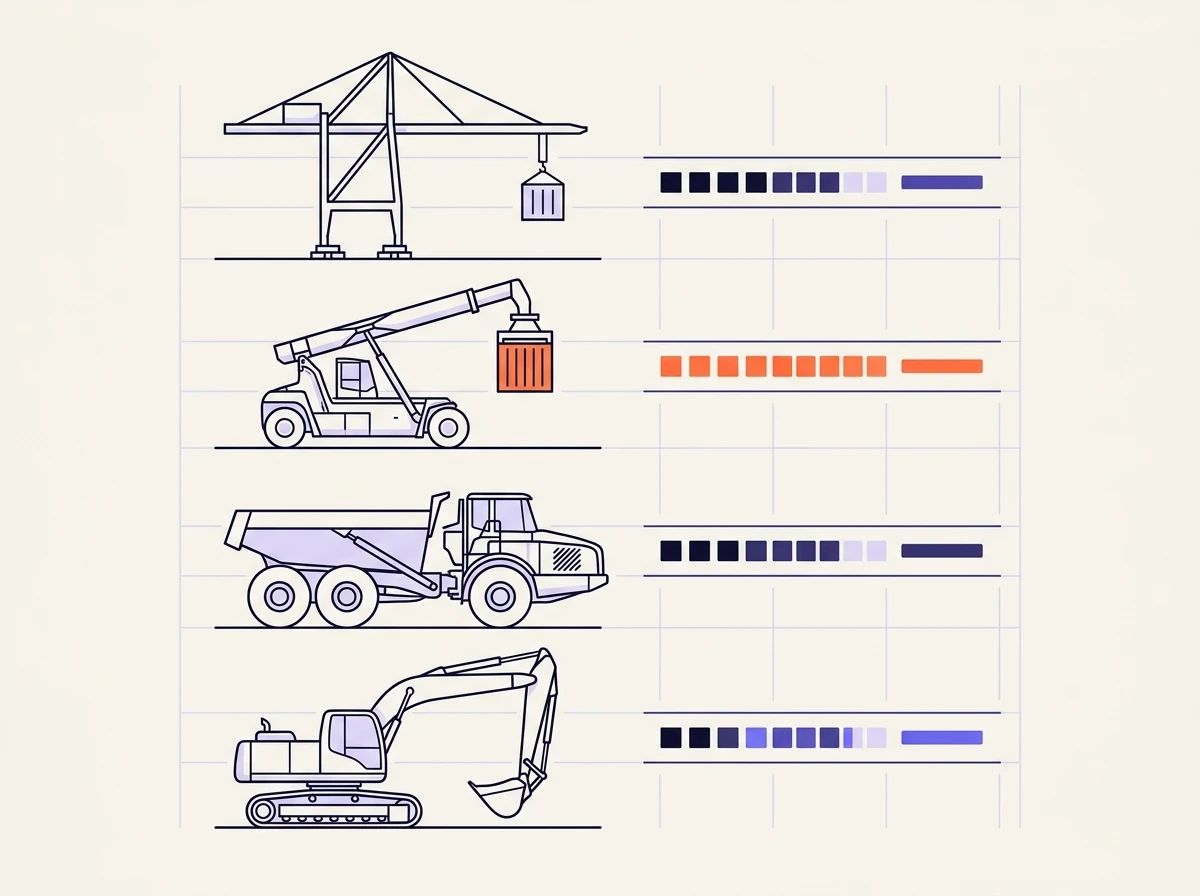
Illustrated asset register: a container crane, reach stacker, articulated haul truck and excavator drawn as line art, each with a condition and cost strip beside it, one strip highlighted in orange.

The category

What enterprise asset management actually covers

EAM software tracks a machine from the day you buy it to the day you retire it, across every site you run. It sits above the day-to-day maintenance work. Past a certain size, the questions stop being about work orders and start being about money and risk.

The line between EAM and a CMMS is worth drawing clearly, because vendors blur it. A CMMS answers what needs fixing and who is fixing it. An EAM answers what you own, what each machine has cost you, when to replace it, and whether you can prove compliance when someone asks. Both sit inside Opsima's wider industrial software range.

The upgrade

When a CMMS stops being enough

01

You run several sites and nobody can produce one asset list that all of them agree on.

02

Parts are real money now, and the same part sits in stock under different numbers at different prices.

03

You decide whether to repair or replace on gut feel, because nobody can pull up what the machine has cost so far.

04

An audit costs you a week of digging up paperwork that should have been one report.

If two or more of those sound familiar, you have outgrown maintenance software and need asset management. That jump is what this page is about.

Capabilities

What the platform covers

Nine areas, grouped around the way a heavy operation actually runs instead of around a list of features.

Procurement

Buying parts without the guesswork

Lead times based on when suppliers actually deliver, rather than the date printed on the contract. Part numbers cleaned up across sites, so the same bearing stops sitting in stock four times under four codes at four prices. Purchase requests drafted from what you actually use.

Cost

What each machine costs to keep

Cost history for each machine, not just for a cost centre. Budgets built from what that machine has really cost you so far, and spend totalled up by site, so repair-or-replace stops being an argument and becomes a number.

Compliance

Inspections, compliance and OSHA readiness

Digital checklists for pre-shift checks and legally required inspections. Fixes get tracked until they are actually closed. The audit trail builds itself as the work happens, so nobody has to assemble it the week before the audit.

Registry

One asset list across every site

One list across sites, machine types and fleets of every age: STS cranes and straddle carriers on the quay, dozers and haul trucks at the pit, forklifts and reach trucks in the warehouse. A 1998 reach stacker and a 2025 electric crane fit the same structure, and neither has to be squeezed into a shape that does not suit it.

APM

Asset performance management

Condition, importance and risk, ranked above the day-to-day work, so your reliability team can argue from evidence. Which machines carry the most risk, which faults keep coming back, and where the next outage is most likely to start.

Reporting

One set of numbers everyone agrees on

Availability, breakdown rate, planned maintenance completion and cost per hour, all built from the same records your crews already feed. Maintenance, operations and finance stop bringing three different spreadsheets to the same meeting.

Historian

Operational data historian

Readings over time from sensors, PLCs and SCADA, stored and searchable right next to the machine record. What makes it different from a normal historian is what else lands there: the events no sensor can see, because somebody called them in over the radio.

IIoT

IIoT connectivity layer

Gateways, sensors and telematics all feed the same machine record, instead of a separate dashboard nobody opens. The point of connecting a machine is what ends up in its record.

ERP

Fits around the ERP you already have

SAP, Oracle and IBM Maximo stay your main system. Opsima reads what they already hold and writes clean records back into them. Nothing gets ripped out, and IT reviews and signs off the rollout in staging before it goes live.

The difference

Most asset data never reaches the asset record

Every EAM on the market handles connected machines well. Sensors report, the system stores, the dashboard draws the chart. The problem is everything else, and in heavy industry everything else is most of the fleet.

A crane spreader gets nursed through a shift and the operator mentions it on the radio. A hydraulic leak is caught during a walk-around and described in a message. A reach stacker is taken out of service for two hours and the reason gets explained out loud at handover. None of those machines sent a signal. All three events matter, and none reach the record.

Opsima picks up those events from the channels your crews already use and writes them to the machine record. That is why the availability number and what the yard actually sees stop disagreeing, and why a machine with no sensors still ends up with a real history.

In the field

At PNCT, a US container terminal running more than 100 straddle carriers, the equipment layer this sits on lifted fleet availability by 5% and cut breakdowns by roughly 15%.

Taavura's Earth Moving Division runs the same layer across quarries and infrastructure sites, after ERP integrations and standard fleet systems had already failed to stick with field crews. Maintenance, operations, IT and engineering all read one picture, and nobody had to change how they report.

Delivery

Two ways in

Tailor

Build the layer on what you already run

Your SAP, Oracle or Maximo stays your main system. Opsima adds a working layer around it and feeds clean records back in. Nothing gets ripped out, and IT reviews and signs off the rollout in staging before it goes live.

Build

Replace the system you have outgrown

When the old platform is the thing holding you back, hard to change and expensive to touch, Opsima builds the replacement around your machines and the way your crews work. It runs on your servers or ours. Working software ships in weeks, and you pay once it earns its place.

Questions from operations and maintenance teams

What is enterprise asset management software?
EAM software tracks a machine from the day you buy it to the day you retire it, across every site you run. That covers how it runs, what it costs to keep, the repairs it needs, and the records an auditor will ask for. A CMMS covers the repair part. EAM adds one asset list across sites, parts buying, full running cost, and compliance records that are ready when someone asks.
What is the difference between EAM and CMMS?
A CMMS answers "what needs fixing and who is fixing it". An EAM answers "what do we own, what has each machine cost us, when should we replace it, and can we prove compliance". Most teams start with a CMMS and outgrow it once they run several sites, spend real money on parts, and have audits to pass.
Do we have to replace our existing EAM or ERP?
No. Opsima works two ways. Tailor mode sits on top of the SAP, Oracle or Maximo you already run, so those stay your main system. Build mode replaces the old system, and only once you have truly outgrown it. Most projects start with tailor mode.
How does EAM handle assets that are not sensor-connected?
This is the gap most platforms leave open. Plenty of machines have no sensors at all, so what is wrong with them lives in radio calls, shift handovers and messages. Opsima picks up those events and writes them to the machine record, so an unconnected reach stacker still has a real history.
Does it include a data historian and IIoT connectivity?
Yes. Readings from sensors, PLCs and SCADA are stored and stay searchable next to the machine record, and IIoT gateways feed the same place. What makes it different from a normal historian is that events no sensor can see land there too.
How long does an EAM implementation take?
Big EAM projects are usually quoted in quarters. Opsima ships working software in weeks, because it is built around your actual machines and the way your crews work instead of configuring an off-the-shelf product. You pay once it earns its place.
Working session

Your assets. Your sites.
Software built for them.

Bring one asset class where the numbers never quite match what the yard sees. We build it on your real data and run it with you. You pay only after it goes live.

On your existing stack
Live in weeks, not quarters
Pay only after go-live
Built and run for you